Court of Appeals Amends Rules Regarding Client Demands in Engagement Letters and Outside Counsel Guidelines
June 04, 2025
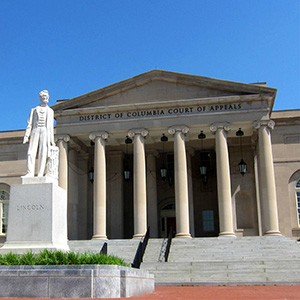
On May 14 the D.C. Court of Appeals adopted revisions to D.C. Rules of Professional Conduct 1.6 (Confidentiality of Information), 1.7 (Conflict of Interest: General Rule), 1.16 (Declining or Terminating Representation), and 5.6 (Restrictions on Right to Practice), as largely proposed by the D.C. Bar Rules of Professional Conduct Review Committee.
The amendments limit certain practices that (1) restrict the ability of prospective clients to engage counsel of their choice; (2) impose restrictions on lawyers’ independence and right to practice; (3) restrict a lawyer’s right to retain a copy of a client’s file, including the lawyer’s work product; and (4) restrict a lawyer’s right to make use of general, nonconfidential information acquired in the course of a representation.
Specifically, new language in Rule 1.6(b) clarifies that the defined term “secret” generally does not refer “to legal knowledge or legal research, to knowledge the lawyer has obtained about the regulatory environment in which a client operates, or to information that is generally known in the local community or in the trade, field, or profession to which the information relates.” A new comment to Rule 1.6 explains that agreements restricting a lawyer’s use of information obtained during a representation could raise concerns about the ability of clients to obtain lawyers as well as the ability of lawyers to represent other clients competently and zealously.
Revised comment [25] to Rule 1.7 states that agreements precluding representation of other clients in circumstances that do not preclude representation under the Rules do not expand the scope of the Rules.
Revised Rule 1.16(d) and a new comment indicate that lawyers can ethically retain copies of client documents, as long as the lawyers maintain confidentiality with respect to those documents.
Finally, a new comment to Rule 5.6 states that “a lawyer should not agree to restrictions a client seeks to place on the lawyer’s ability to represent other individuals or entities whose representation is not otherwise precluded by these rules if those restrictions would unduly interfere with the general ability of clients to obtain lawyers or lawyers’ ability to engage in public service or would undermine the integrity of the profession.”
The amendments take effect September 15, 2025.