Court of Appeals Amends Rules Regarding Access to Electronic Information, Prosecutorial Disclosure, and Oversight of Nonlawyer Assistants
April 14, 2025
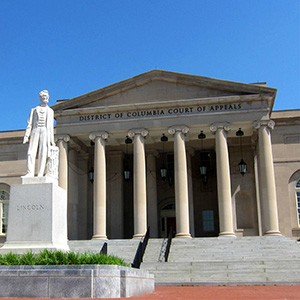
On April 7 the District of Columbia Court of Appeals announced amendments to D.C. Rules of Professional Conduct 1.1 (Competence), 1.6 (Confidentiality of Information), 3.8 (Special Responsibilities of a Prosecutor), 4.4 (Respect for Rights of Third Persons), and 5.3 (Responsibilities Regarding Nonlawyer Assistants).
The amendments involve a wide range of duties and responsibilities of lawyers. Changes to Rule 1.1 address a lawyer’s continuing responsibility to keep abreast of changes in technology and the steps that a lawyer must take when contracting with a lawyer who is not associated with their firm.
Amendments to Rule 1.6 address a lawyer’s duty to exercise reasonable care to prevent unauthorized access to electronic information. The court made amendments to subsection (f) as well as Comment [40].
Amendments to Rule 3.8 ensure consistency with the Court of Appeals’ holding in In re Kline and include new Rules 3.8(h), (i), and (j) as well as Comments [4]–[7] regarding the duties of prosecutors to disclose certain post-conviction exculpatory information. Changes to Rule 5.3 address ethical obligations when lawyers outsource legal work or use “outside” lawyers, and when the client rather than the lawyer is directing the outsourcing.
The court deleted the words “upon request” from Rule 3.8(d), added language relating to impeachment and information tending to support a motion to suppress evidence in Rule 3.8(e), and adjusted language regarding prosecutorial constitutional and ethical responsibilities surrounding disclosure.
For consistency, the court changed “is aware” in Rule 3.8(i) to “knows.” This change addresses the inconsistent use of terminology in subsections (h) and (i).
The introduction of new Rule 3.8(h)(3) addresses the fact that in the District of Columbia there are two different “chief prosecutors” — the United States Attorney’s Office (USAO) and the D.C. Office of the Attorney General (OAG). Amendments to Rules 3.8(h)(2) and (i) also incorporate similar language, avoiding the imposition of duties on OAG attorneys to attempt to remedy a conviction in a case prosecuted by the USAO, and vice versa.
Rule 4.4 initially imposed an obligation to return inadvertently transmitted communications sent to “an adversary.” Under the revised rule, the obligation now applies whenever information is inadvertently transmitted to “another lawyer.” The court added Rule 4.4(c) to address the obligations of an attorney who begins reading a writing without knowing that it is subject to the rule and determines the rule’s applicability while reading. The court also provided further guidance on these issues in changes to Comments [2]–[4].
Finally, the court added two comments to Rule 5.3. With the addition of Comments [3] and [4], the court has provided guidance to lawyers on the responsibilities they have when contracting with nonlawyers who are not associated with their firm.
The full text of the court’s order implementing these changes, including both clean and redline versions of the rules as amended, can be found here. The amendments will go into effect on May 6, 2025.