Board of Governors Addresses Questions on D.C. Bar’s Limitations to Issue Public Statements
June 17, 2020
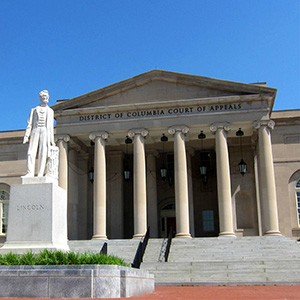
Established in 1972 by the D.C. Court of Appeals for certain limited purposes and governed by the Rules of the Court, the District of Columbia Bar is a mandatory, integrated bar with more than 110,000 members. Our members are diverse in demographics, practice, thought, and political opinion.
The D.C. Bar Board of Governors is charged with conducting the affairs and activities of the Bar while respecting the diversity of its membership. In making any public statement, the Board of Governors must be mindful of, and adhere to, certain guidelines and limitations.
In a series of referenda approved by the membership in the 1970s and 1980s, the D.C. Bar was limited in its ability to: (1) engage in certain activities without the express approval of its members; and (2) fund certain activities using dues or license fees. These restrictions include a prohibition on making any public statement on matters related to legislation or amicus briefs unless expressly authorized by the membership itself.
Currently, the membership has authorized the D.C. Bar and Board of Governors to speak only on three matters: (1) the need to fill promptly judicial vacancies; (2) adequate court funding; and (3) public funding of legal services to ensure access to justice.
In considering any public statement, the Board of Governors also considers the First Amendment rights of its diverse membership. In Keller v. State Bar of California, the U.S. Supreme Court held that mandatory, integrated state bars could constitutionally fund activities that: (1) are germane to the regulation of the legal profession; or (2) improve the quality of legal services. Integrated bars could not, however, fund “activities of an ideological nature which fall outside of those areas.”
Since lawyers licensed to practice in the District of Columbia are required to be members of the D.C. Bar and pay annual license fees, the Board does not make public statements on political or public policy matters unless approved by the members and otherwise permitted under the Rules Governing the Bar and existing law.